

Rest Easy: How Modern Smile Alignment Can Help You Get a Better Night’s Sleep
Proper structural jaw positioning directly influences upper airway dimensions during restful sleep. At Trimmell Anders & White Orthodontics, advanced diagnostic mapping identifies anatomical constriction, allowing specialized alignment therapies to optimize night airflow. Expanding narrow arches creates vital space for the tongue, reducing airway collapse and supporting quiet, restorative breathing.
Have you noticed disrupted rest or persistent fatigue despite spending eight hours in bed? Families searching for orthodontic sleep apnea treatment in Wichita often learn that dental alignment directly impacts upper respiratory airflow. At Trimmell Anders & White Orthodontics, our team evaluates structural narrowness in the upper jaw that limits breathing space during sleep. Maxillary skeletal expansion refers to gentle widening of the upper jawbone to increase nasal floor capacity. Patients frequently experience nighttime obstruction when narrow arches push the tongue backward into the throat corridor. By utilizing precise 3D diagnostic imaging, our clinicians measure the airway volume index, which quantifies total internal breathing space. Corrective arch expansion opens these vital passageways, allowing individuals across the K-96 corridor to enjoy quiet, restorative sleep.
The Biological Connection Between Structural Alignment and Nighttime Airflow
Optimal breathing during sleep requires an unobstructed path from the nostrils down into the lower throat. Narrow palate architecture forces the lower jaw into a retroverted placement, pushing soft tissues toward the back wall of the airway. Sleep disruption occurs when relaxed throat muscles collapse inward against restricted bone pathways. Widening the palate creates essential room for the tongue to rest naturally behind the front teeth rather than drifting backward. Modern digital scanners construct complete physical models without relying on uncomfortable traditional impressions. Gentle expansion techniques stimulate natural palatal suture remodeling in younger patients while stabilizing structural breathing channels. Unrestricted nasal airflow reduces reliance on mouth breathing, helping maintain optimal humidity and healthy oral bacteria balance overnight.
Structural Airway Evaluation Matrix
| Assessment Parameter | Standard Dental Alignment | Targeted Airway Expansion |
| Primary Clinical Goal | Straightening crowded teeth | Widening palatal arch and opening airway |
| Diagnostic Focus | Visual tooth positioning | Digital airway volume index measurement |
| Structural Impact | Localized tooth movement | Skeletal width expansion and tongue repositioning |
| Respiratory Outcome | Minimal impact on breathing | Reduced upper airway constriction during sleep |
Key Clinical Benefits of Airway-Focused Care
- Enhanced nasal breathing capacity resulting from targeted upper jaw widening.
- Precise 3D digital imaging that maps anatomical obstruction points with absolute clarity.
- Strategic tongue repositioning that prevents nighttime tissue collapse in the throat corridor.
- Non-invasive orthodontic appliances designed to support natural, restful sleep patterns.
Common Questions About Orthodontic Sleep Apnea Treatment
Waking up tired or listening to a loved one struggle with nighttime snoring creates understandable concern for the entire household. Many patients are surprised to learn that an orthodontist can address root structural causes of sleep disruption rather than focusing only on cosmetics. Exploring these anatomical solutions helps families make informed decisions about long-term sleep health and oral wellness.
Can Orthodontic Treatment Completely Cure Sleep Apnea?
Orthodontic intervention significantly improves airway dimensions by correcting jaw structure and widening narrow dental arches. Our team in Wichita works alongside medical sleep specialists to ensure every patient receives comprehensive, tailored care. Expanding restricted skeletal passages reduces physical air obstruction, providing a permanent structural foundation for improved breathing.
How Does Palatal Expansion Help Increase Airflow During Sleep?
Widening the upper jaw expands the nasal floor and creates the space the tongue needs to sit forward. Many local families find this non-surgical structural adjustment remarkably effective for relieving nighttime airway constriction. Patients experience enhanced airflow capacity as expanded bone geometry prevents soft tissues from collapsing into the throat.
At What Age Should Someone Be Evaluated For Airway-Focused Orthodontics?
Children as young as seven benefit immensely from early airway screening because their facial bones are still actively growing. Our practice regularly welcomes parents from across East Wichita seeking early guidance for breathing or sleep concerns. Timely clinical intervention guides jaw development early, preventing severe airway restriction before adult bone maturation is complete.
Schedule Your Orthodontic Sleep Apnea Treatment Consultation in Wichita
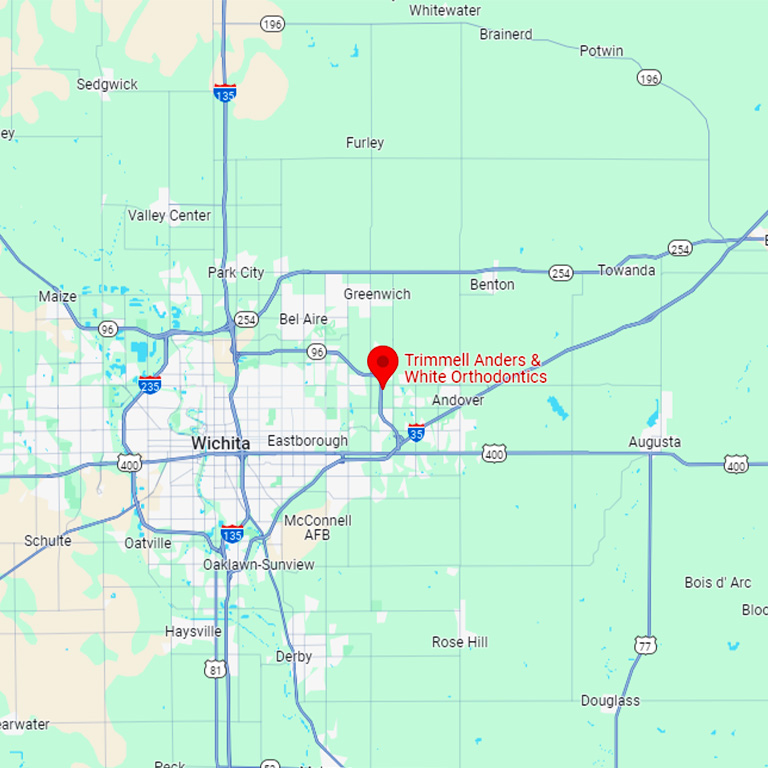
Taking the first step toward quiet, restorative sleep begins with a comprehensive structural airway evaluation. Trimmell Anders & White Orthodontics provides advanced digital diagnostics conveniently located near the US-54 Kellogg Avenue interchange and the K-96 corridor. Connect with our dedicated clinical team today to schedule your sleep airway consultation and breathe easier.